Eleni Koumoundouros Opinions Editor
In a time where social connection and meeting new people seem to be as easily accessible as ever, with social media and apps like 222 and Hinge, there still exist sentiments of disconnect and isolation amongst Gen Z. As online discussions coin terms like “male loneliness epidemic” and “isolation epidemic,” the growing sense of being alone despite being the most connected generation ever has spilled into the dating realm.
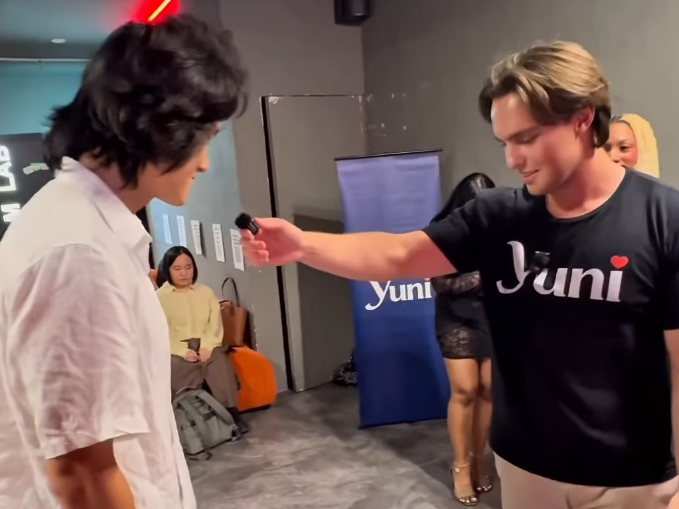
One app, Yuni Social, a U of T student-founded dating app, has taken social media (and campus) by storm through its unique concept: weekly matches that are released on Wednesdays at 7 pm. But beyond the app, Yuni Social has recently been racking up thousands of views and reactions online for its absurdly popular “Pop the Balloon” student videos, where contestants line up, holding balloons, and pop them when the romantic interest that’s being presented is no longer of interest to them. While these videos have existed before and are popular on YouTube, the way in which the contestants are chosen, presented, and judged during their brief introductions to potential connections often puts them at the centre of ridicule online. It begs the question: is Yuni Social taking advantage of the human need for connection and profiting both from event tickets and social media interactions, all while creating only limited genuine human connection?
I think the answer here is obviously yes. While co-founder Boris can be found all over social media promoting boba tea and club events, or walking around campus promoting the app, the contestants themselves are often ridiculed online through comments. Many of their “Pop the Balloon” videos that are posted to Instagram garner views in the millions, and the comments often point out attributes of participants or comment on the way the person presents themselves. The social media account for Yuni Social has pinned comments on some of these videos to remind commenters to be respectful, as these are real people.
But I think the truth here is that if the app truly cared about people’s ability to form connections and their safety online, these videos wouldn’t exist, and the app would instead promote the connections that actually worked out. The use of one-minute reels that show someone being open and vulnerable, looking for connection, only to be used to get attention online doesn’t convey the message that the app is supposedly trying to convey, that is, to serve as a bridge for connection for those who participate. Rather, it seems like another company in the sea of “dating” apps and events that take advantage of people trying to find someone in a world where seemingly everyone yet simultaneously no one is available. If an app like Yuni Social actually wants to see growth in the connections it forms and, more importantly for its “investors,” and a rise in users, it needs to switch its image from being a reality show to a show of reality, with authentic and meaningful interactions. But why would it give that up when reactions online function as the newest currency in marketing?
Putting someone online with cheap edits after they have already stepped into a situation where they lack control over how they are presented only further pushes people into this supposed isolation epidemic. It induces a sentiment that their desire to be wanted, to feel connected, and to find “the one” can result in humiliation and unnecessary and unwanted media attention. These apps do not care about finding connections, because if they did, people would use them one time, find “the one,” and never use them again. Many apps, like Tinder and Hinge, put users’ best matches behind paywalls, and the use of events like “Pop the Balloon” further puts a cost on finding connections in an endlessly large city like Toronto, where it used to be a free experience.
The reality is that people want to find connections, but often they turn to these apps and events as a last resort. We don’t need more Tinders and Hinges that post attempts at connection online; we need connections that form in real life, without needing to spend $15.99 to attend an event. Connection used to be easy to find and free, without the failed attempts being broadcast to the entire world. So don’t feel pressured to spend the money on a ticket for an event to meet someone. Focus on yourself and your friendships. Love comes to those who find love in themselves, not to the first investor in an app.





Leave a Reply