Ricardo González Sierra Contributor
Fragment from an anonymous diary
13 October, Evening
I finally gathered the courage to enter the Count’s chambers, though God knows my soul was ill-prepared for the horrors that awaited. I crept through those gloomy corridors, where the suffocating silence was broken only by faint shafts of moonlight. My eyes restlessly swept across the room in search of a clue that might calm my nerves through this nightmare. Alas, perhaps my foolish curiosity marked my doom, for when I least expected it, I heard a voice–loud and terrifyingly imposing–broke the stillness from directly behind me. I suddenly turned my head, with my blood freezing in my veins. He was there… Count Dracula himself stood before me…
Pause for a moment. Picture the figure standing in the dark doorway. What do you see? A grotesque, bat-like creature, or a charming Victorian gentleman? Whatever image comes to mind, it has likely been shaped by over a century of adaptations that have transformed Dracula beyond the character that Bram Stoker introduced in 1897.
Nosferatu. Do not utter this word…
One of the most influential vampire films is F.W. Murnau’s Nosferatu (1922), which is an unauthorised adaptation of Stoker’s novel. After failing to secure the rights, Murnau changed several details, including the Count’s name to Orlok, and his destination from England to Germany.
There is a striking difference between the two vampires. Stoker’s Dracula could blend in with aristocrats, presenting himself as a well-dressed, educated gentleman. Orlok, on the other hand, makes little effort to hide his monstrous nature. He is tall and bald, with rat-like features and elongated front teeth, resembling a creature that crawled out of a grave.
However, Orlok’s influence goes beyond his appearance. Nosferatu helped establish the vampire’s fatal vulnerability to sunlight. By contrast, although having his powers diminished, Stoker’s Dracula could walk normally in broad daylight.
A man of good… taste
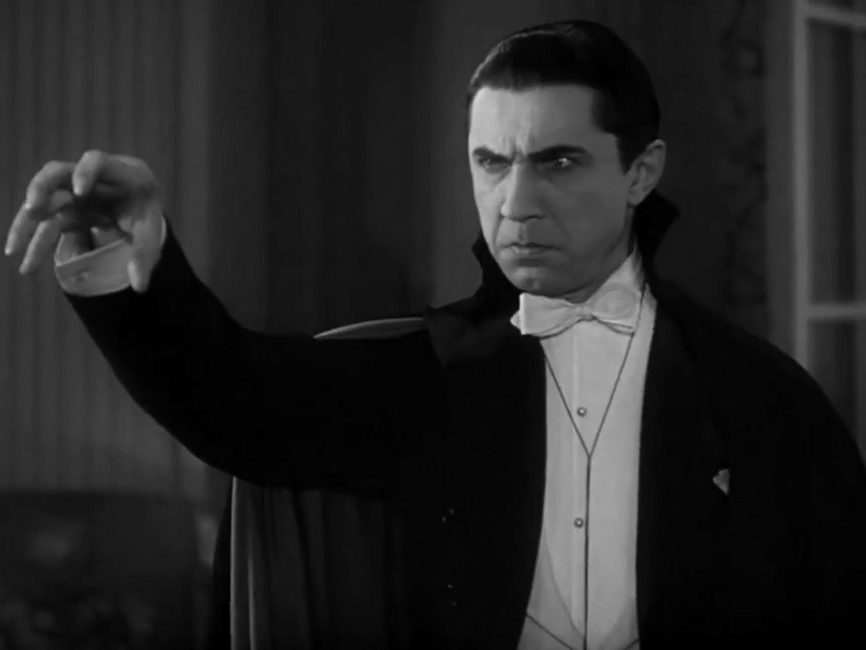
In 1931, Bela Lugosi turned Dracula from a vile monster to a cinematic icon. For Universal’s adaptation, Dracula, the Count was stripped away of the grotesque beastliness,
making him a fancy gentleman in a tuxedo with a more elegant hairstyle and a cape. Even his powers were more centred around hypnotism rather than animal transformation.
Count Dracula went from being someone to be feared, to someone who captivates audiences.
Six decades later, Francis Ford Coppola’s Bram Stoker’s Dracula (1992) continued to shape this charming side of the Count by incorporating a tragic backstory. At this point, the audience sees Dracula as a tragic human-like monster, rather than a purely evil creature. Played by Gary Oldman, the Count is re-imagined as a heartbroken character driven by lost love. This movie shows a more romantic approach to the devilish, soulless creature that Stoker originally created.
He never said “bleh bleh bleh”!
After long decades of romanticising, and humanising the Count, he reached a point in which he can be taken into the comedic realm of film.
In Genndy Tartakovsky’s Hotel Transylvania (2012) and its sequels, ‘Drac’ has become a loving, yet grumpy father who runs a hotel for monsters. The horror remains, but is mutated into jokes. For instance: the Count is intolerant – not deathly vulnerable – to garlic, prompting gastric issues upon consumption.
Adam Sandler voices this character that has been stripped of its most terrifying aspects. This animated movie moved far from Stoker’s Dracula. Instead of being based on the original book, inspiration is taken from Orlok’s weaknesses: Universal’s Dracula’s fashion sense, and Coppola’s Dracula’s humanising aspects. As a result, we see a vampire who prioritizes his daughter’s safety over drinking blood.
The Immortal Count
Count Dracula has survived hundreds of iterations and has become a part of modern mythology. Each adaptation has taken different aspects of the vampire and made it its own; whether that is his monstrous appearance, his seductive charm, tragic past, or comedic potential. All of them have something to contribute to building his complicated lore.
Perhaps, the secret to his immortality lies not in his vampire blood, but the artistic evolution that allows him to resonate with different audiences.


Leave a Reply