Jeremy Zhang Staff Writer
Microtransactions in games have a long history of greed from companies and outrage from customers. One of the first microtransactions was created in 2008 and was armour for your horse in The Elder Scrolls IV: Oblivion. It was a $2.50 USD purchase that gave your horse gold armour and added a few extra quests. Most people would think of that as a ridiculous, pointless purchase, which is exactly players at the time thought too. Nowadays, $2.50 for a cosmetic? PshAW — that’s basically nothing. Check out this knife on Counter-Strike that costs the same as a used car: $10,000. It would be a shoddy car, but it’s definitely more useful than a few colourful pixels.
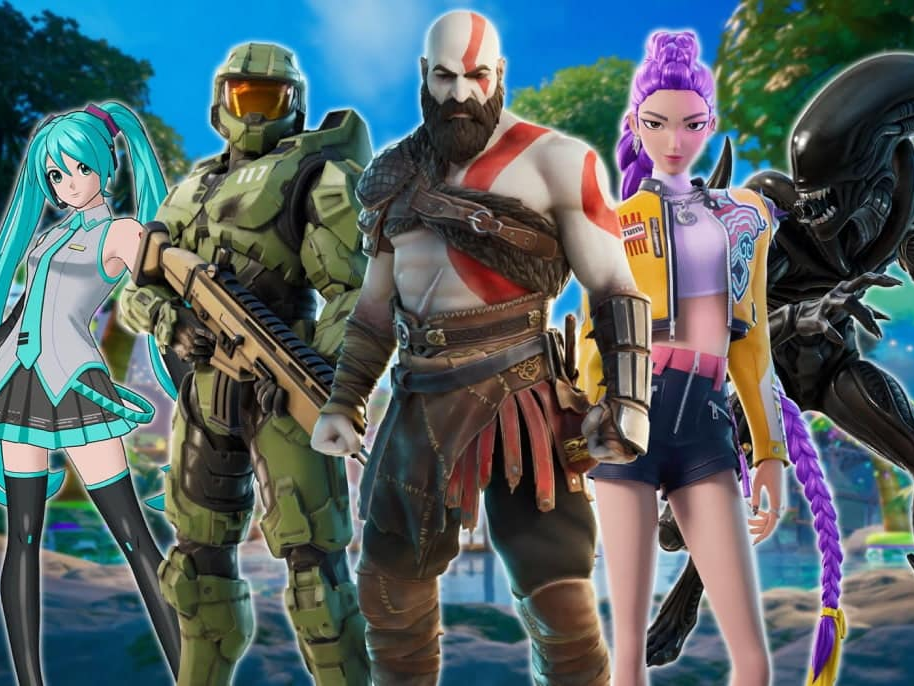
Cosmetics can go up to such an expensive price because of the power of the player market. These cases are rare, but their mere existence is mind-boggling. Moreover, loot boxes have propelled the video game industry into riches through ethically questionable child gambling. Some items have a lower random chance of being unboxed, which makes them more desirable. Add trading and a free market, and super rare items rise to ludicrous prices. Honestly, virtual items with markets, graphs, and trends start to feel like NFTs — things that were stupidly popular which fizzled out at a record pace. Of course, this moneymaking method existed before games in trading cards. Sports and Pokémon cards have their own shows where sellers show off their super cool pieces of cardboard, and buyers spend hundreds to thousands of dollars on them. The concept of collector’s items has existed for a long time now, and a grandparent of someone you know probably has a fascination with collecting rare coins or stamps. Rare virtual cosmetics are just the newest form of niche fixations. As a result, new ways to squeeze money out of players keep evolving. Ever since Fortnite hit the market with the battle pass system, games have aped it to oblivion. The satisfying feeling of progression and the game’s wackily infinite crossovers make it ridiculously lucrative for a free-to-play game. Nowadays, I feel a general positive sentiment toward games, especially indie games, that have stopped pushing not-so-micro microtransactions.
I think that there is definitely a sweet spot for how much one should spend on pure cosmetics. A $10,000 knife? That’s the most moronic purchase I have ever heard of. A $10 skin that will have you and three of your friends giggling to yourselves? Well, it’s only $10. I’m not losing too much sleep over that. Money is my most important and obvious issue. I know not everyone has $20 to blow on games every Steam sale, but those sales sure have a chokehold on me.
Money is not the only currency spent on virtual items. Time is the next most important one. Money can accelerate the process, skipping the time investment needed to unlock cosmetics. Spending the limited time that you have alive on a game seems pointless from the outside, and it can be if you’re only doing it for vanity.
I cannot comprehend people who play a game like it’s a nine-to-five job only grind for cosmetics. To me, that’s the complete antithesis of gaming; it’s supposed to be an escape from your nine-to-five. Even just playing a game is a sort of cosmetic flaunt — thousands of hours of playtime can look impressive. I personally have too many hours in a game (760 in Team Fortress 2) That time could be better spent, but everyone has their “useless” predilections that bring them joy.
Getting fitted out in real life totally improves your day-to-day. Everyone you meet will notice. You look cool, feel cool, and are cool. Time and money are totally well spent if it makes one swankier. I cannot say virtual items hold the same value. Only other enthusiasts recognize any effort, money, or time put into cosmetics. Great for the few people with your interests; you will practically be soul-bound after finding out you both put a comical amount of time or money (or both) into a game. Both tangible and virtual cosmetics can help form connections, though game cosmetics have far less widespread use. Physical collectibles such as those cards and coins mentioned before fare better; a neatly organized binder looks impressive even if I have no idea what the contents entail.
Sure, there are totally more useful things that money could go to, but this is fun. That is the point of games anyway. People who criticize others for their spending habits always have some penchant of their own. I will never understand things like designer clothes, even though they may have an appreciable effect on your life. But something arguably more invisible, like a $100 Steam library? Ooooohhh… Either way, it is easy to fall into hating on something, when really, no interest can ever be objectively defined as better than another. It is too easy to mock a $10,000 knife, though.
What we consider worth and not worth purchasing is all subjective. In-game cosmetics seem fairly useless and that’s because they are. They have no use in the real world, yet we derive joy from them. Some primitive pride makes us enjoy these little things, just as people have enjoyed rarities for most of human history. I think that makes them worth it. In short, is it useless? Yeah. But I like it. Not a $10,000 knife, though; that is still an awful purchase.





Leave a Reply