Storm Husbands Features Editor
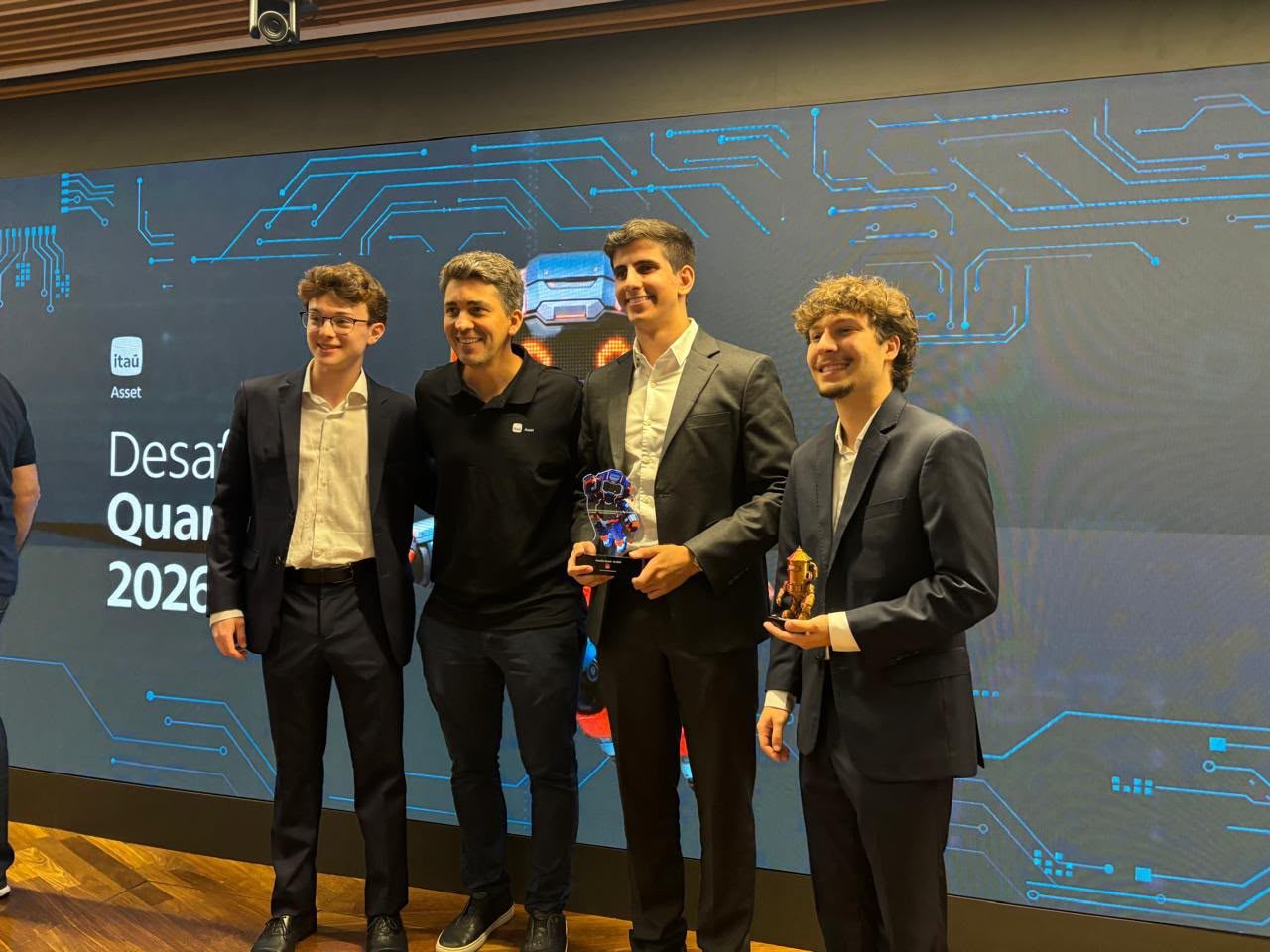
St. Michael’s College at the University of Toronto has a multitude of initiatives. Our internal community is strong and tight-knit, but too often we fail to acknowledge the diverse talent outside our campus organizations. In an effort to highlight St. Mike’s students, I sat down with Diego Rodrigues Saraiva, who recently won first place in the Itaú Unibanco Quant AI Challenge in São Paulo. A first-year hailing from Rio de Janeiro, Saraiva’s favourite part of growing up in Brazil was the people, citing their warmth and the country’s rich inclusivity. Saraiva came to U of T due to its prestige, expressing fondness for its academic environment and the dedication of its students. Inspired by friends and his interest in the quantitative aspect of finance, he plans to pursue a Mathematical Applications in Economics and Finance Specialist along with a minor in Computer Science.
The competition challenged undergraduate students to utilize artificial intelligence for financial asset management. Joined by friends from Cornell and Duke, Saraiva’s team created SILO, a robot that trades commodities based on market forces. The model used Claude’s generative AI systems Opus and Fable to analyze the relationship between mining companies and metals. The robot investigated 12 commodities across three strategies — the macroeconomic landscape, inventory or storage, and mineral lead lag — and combined them into one portfolio.
This macroeconomic landscape acts as a signal. The AI analyzed these factors, along with 1,524 news headlines, to determine the weight of each commodity. The AI also analyzed crude oil, heating oil, and natural gas inventories graphically. Inverted curves indicated a physical shortage that helped companies determine whether to buy or sell energy based on the alignment between the futures curve and inventory. Mining companies receive news before sellers and can use the model to predict whether to buy or sell gold, copper, and silver.
If, like your interviewer, you also do not have a background in finance, the mechanics behind this quant model can seem confusing. Saraiva presents the project through a metaphor of an ice cream truck driver, movie theatre operator, and umbrella seller. Ice cream sells more on sunny days, umbrellas more on rainy ones, and movie tickets sell steadily no matter the weather. The system worked to combine the sales of all three businesses and their best-selling days in order to maximize returns. When applied, SILO generated 22% annualized returns in a backtest from 2015 to 2024 with a Sharpe score of 1.07, a measure of how much is gained in comparison to risk, indicating whether the action was secure.
Furthermore, the robot operated relative to the Bloomberg Commodity (BCOM) Index, which tracks the price performance of physical raw materials. When BCOM rose, so did the quant, but when BCOM’s efficiency fell, the quant model declined less. Moreover, to mitigate flaws, SILO included a ‘red team’ that tested the security of the robot. Over 42,000 backtests were run, and separate blocks of time were tested. The audit detected only 14 flaws, which took little effort to correct, making it a successful project.
Saraivo recalls the competition with a smile, having presented in front of company CEOs and pioneers in the finance industry. He notes the challenge’s low barriers to entry, saying he had no prior knowledge of quants but deepened his understanding. He also highlights the challenge’s plans for international development, making it accessible across other regions and to those with different backgrounds.
One pertinent question I could not help but ask was about the challenge’s use of generative AI. It feels almost taboo nowadays, with a harsh dichotomy of opinion drawn between those in science and those in the arts. It makes Saraiva’s perspective refreshing, stating that AI should be used as a tool with proper understanding and additional effort: “a complement rather than substitute.” Ultimately, however, he thinks that art should remain as it is, fundamentally human.
As the interview closed, I wanted to ask Saraiva how his experience within the St. Mike’s community has been thus far. He describes feeling connected to his peers and embraced by the college despite its large size. We often think of vanity and pride as interchangeable, but really, we must encourage the virtue in hard work that leads to success. I am left to wonder if a community this welcoming could perhaps be prouder of its prized students, showcasing and developing their talents outside the COOP and in our wider world.





Leave a Reply