Roya Alisultanova Copy Editor
Content Warning: Mentions of Suicide
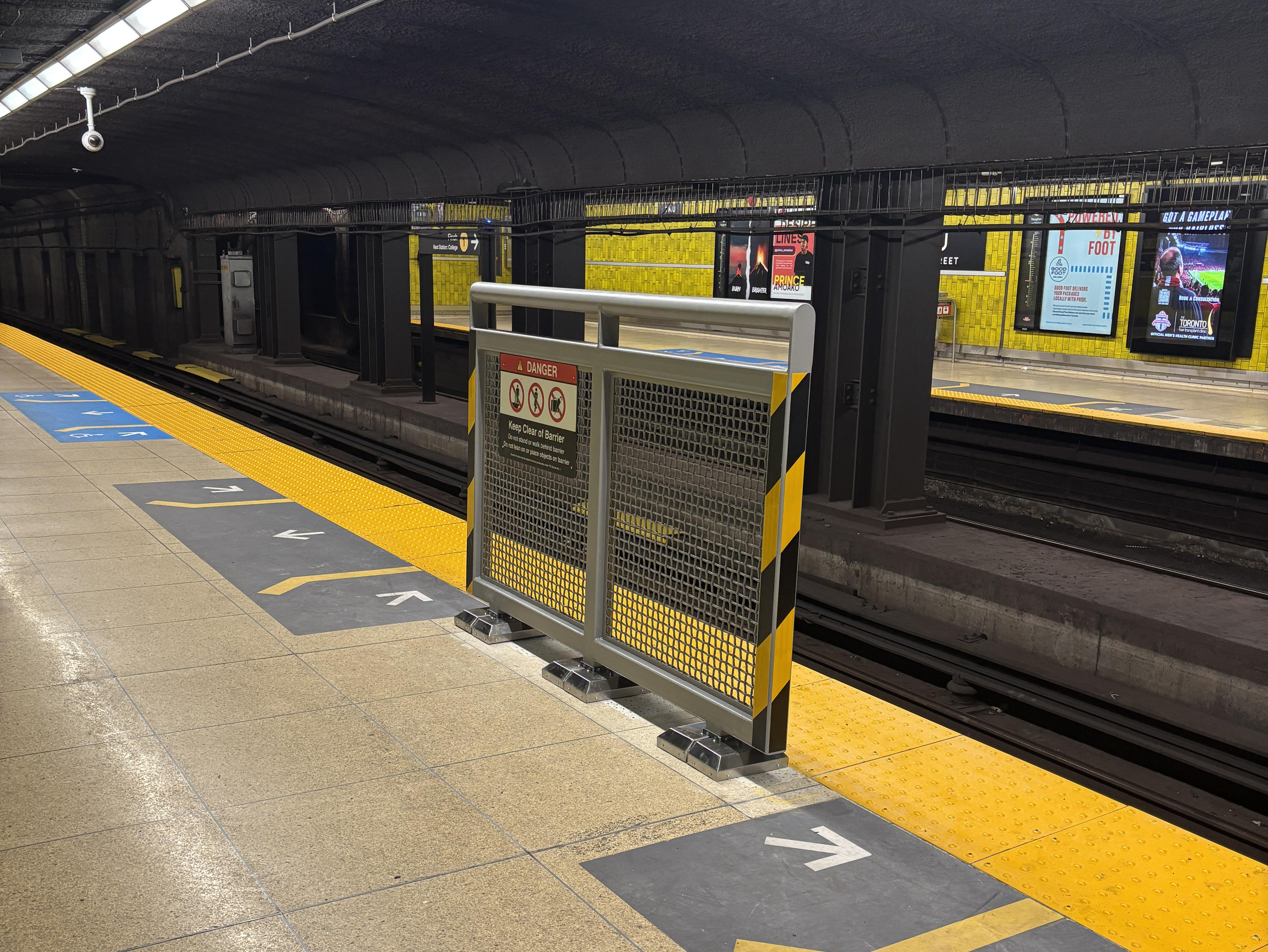
On Mav 27, Toronto Mayor Olivia Chow announced a three-year project to install steel safety barriers across high-risk TTC platforms. TMU station which underwent construction between September and October of this year, is the first of 10 proposed sites.
Modeled after New York City’s successful implementation of a similar initiative, the project aims to “reduce the risk of track level incidents and enable faster response through Transit Control. improving actual and perceived safety.”
TTC CEO Mandeep Lali has spoken in support of the barriers by comparing the project to its counterpart in New York City: “when we looked at the data [from New York City] post-instillation of the barriers, there was a difference.”
Mayor Chow is asking “the federal and provincial government to assist” because the project “costs a substantial amount of money.” A 2025 study bv the TTC found platform edge doors would cost between $44 and $55 million at each station, while steel barriers only cost about S2 million per station.
Perception is not to be dismissed as a determining factor. Transit advocate Andrew Pulsifer, speaking with Global News, stated that “Perceptions of safety is a really key aspect to all of this and if [installing the barriers] leads to more people choosing to take the TTC more often. we can’t disparage them too much.”
However, the project has not seen much improvement in public perception in the two months since it was dubbed “a band aid approach” by a skeptical observer of the first barrier installed at TMU station. U of T students have described the measure as “half-hearted” and “like a joke.”
Eisha Banwait, a UTSG student who travels by TTC for a daily commute of over an hour, says that “[the barriers]” don’t actually prevent anyone from being pushed or falling. All they’re doing is creating short safe patches along the platform edge. It isn’t anywhere near enough given the situation in Toronto.”
Banwait says she is ultimately “not sure how much of an impact they’d have.”
Other commuters, choosing to remain anonymous, are equally as concerned about the efficacy of the program.
“If people are dedicated enough to jumping off the platform they’re gonna climb over the barriers,” said one anonymous student in an interview with The Mike.
“I think the idea is good, but I don’t understand why it’s so expensive when the measures seem so half-hearted. I understand that full-height barriers would be costly, but what they’ve produced instead would not stop any determined jumper. I’d have to see good stats from places with similar barriers installed to change my mind but based on appearance alone these ones only seem to give the illusion of safety.”
Another pointed out that “[The program] seems like a good idea to help stop jumpers” since ‘ ‘having a barrier may slow them down or cause them to debate [committing suicide].”
As of November 2026, construction of the pilot initiative has been completed at TMU station.
One student, who regularly commutes via TMU station, commented on the notable gaps in the completed structure. “The barriers are in place now. but they’re just sections of a fence that span very small areas of the platform. I don’t see a point in them. I understand where they’re coming from. but there is no clear functional property.”
Officials and commuters have expressed concerns that the money is being misspent, emphasizing Toronto’s increasing need for more effective infrastructure.
Speaking to CBC News, Councilor Josh Matlow said “I think it’s a waste of money. I would rather not go forward with that and actually use that money toward rolling out real platform-edge doors, even if it takes a little longer.”
Banwait concurs: “I feel that even these current waist high platforms are going to, to an extent create new sorts of delays, disruptions, and vandalism. I think the problems that need to be addressed before any of these platform barriers are Toronto’s mental health an homelessness crises.”





Leave a Reply