Claire Wilson Copy Editor
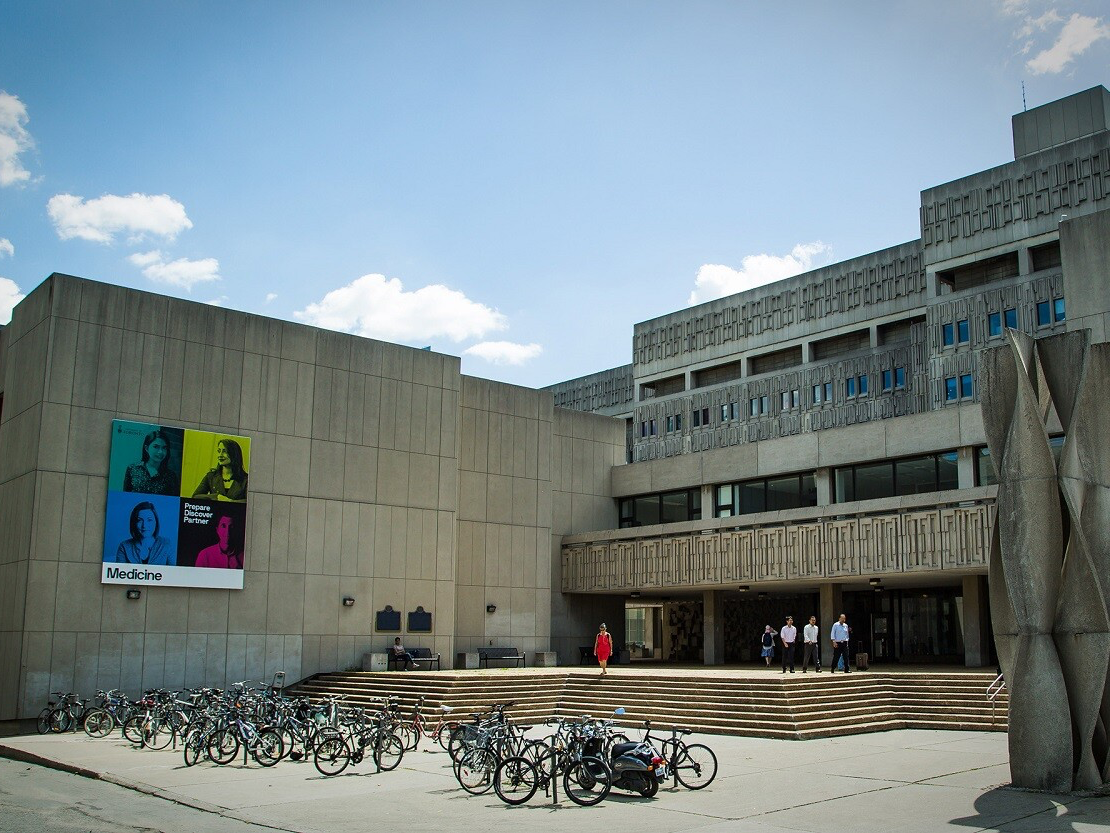
Almost 10 years ago, several asbestos leaks were found in the Temerty Medical Sciences Building during a $190 million renovation project intended to remove the toxic material from seven locations in the building. These leaks resulted in the closure of two labs and the decision by U of T to fire the contractor leading the project.
Many older U of T buildings contain asbestos, as it was a common building material before the 1990s. According to U of T’s Asbestos Management Program, “asbestos is a fibrous material used in many University building materials in the past because of its characteristics of strength, heat resistance and chemical resistance.” Though simply working or living in a building with asbestos-containing materials (ACMs) has been shown not to pose an elevated health risk, there is much greater risk when it comes to friable ACMs. These are ACMs that are dry, powdery, or easily crumble under force, causing the deadly particles to be released into the air.
According to a 2017 CBC report, “in one case, a worker drilled a hole in a wall that led to a pile of dust containing asbestos to fall to the floor. In another, dust containing the substance escaped a containment area that was insufficiently sealed. And in the third, air pressure forced dust from a service shaft where work was being done.” In total, there were five asbestos incidents reported in the building.
Now, U of T is planning a completely new Temerty Building, describing it as a “top priority for the university” in the initial press release. Some interior abatement and selective demolition are already underway, as well as renovations in Hart House and Sidney Smith, which have also had issueswith asbestos. In light of the leaks almost a decade ago, some students are concerned about the university’s transparency about the process.
During the 2017 leaks, physiology and medicine professor Adria Giacca wasn’t notified that her lab could be at risk until a full five weeks after asbestos had been found in the building.
On March 15th, 2017, the University of Toronto Faculty Association wrote a petition demanding the right to work in a safe and hazard-free space, as well as access to all results of previous asbestos incidence tests and reports of asbestos abatement.
The petition also revealed that staff were “exposed to asbestos levels higher than Occupational Health and Safety Act mandated acceptable standards,” and that staff on the 6th and 7th floors were “kept in the dark about these incidences, until…almost 45 days after the incident. Faculty members from four separate labs were told that it was safe to resume work post-abatement, but were not given the test results, even after several requests. An unacceptable amount of asbestos was even found in one lab after being informed that it was safe to resume work post-abatement. Almost a decade later, communication about the abatement process doesn’t seem to have improved.
The university has created the University of Toronto Asbestos Database, which allows members of the university community and the public to access records of confirmed, suspected, and disproven findings of asbestos in many U of T buildings. While this may provide a sense of transparency for a large number of buildings, labs, classrooms, and community spaces on campus, Sofia Terèse Glantz of The Varsity notes, “this database does not include buildings under the jurisdiction of the federated colleges (Victoria College, St. Michael’s College, and Trinity College). For students living and studying in these colleges, there is no publicly accessible record of buildings containing asbestos, even though many were built while asbestos was widely used.”
While students and faculty can sign up for construction updates, there has been little effort to inform students that this is even an option. There is currently no permanently hosted resource providing updates on the abatement process.





Leave a Reply