Sara Schmidt Contributor
In popular culture, Frankenstein is often flattened into a single, epic moment when the mad scientist exclaims, “It’s alive!” as lightning cracks and his monstrous creation awakens. The plot unfolds with the creature’s alienation from society and his ensuing rage against the scientist who made him and the world that rejects him. It seems like a simple plot, yet countless adaptations exist. What one filmmaker considers a faithful adaptation, another sees as an opportunity for reinterpretation. Who has succeeded? No one truly, in my opinion. Yet, the sheer volume of Frankenstein adaptations testifies to the enduring legacy of Mary Shelley’s Gothic classic.
Published in 1818, Frankenstein, or The Modern Prometheus, was an immediate success with notable praise for its philosophical richness. Shelley lived at the tail end of the Enlightenment, an epoch defined by an unrelenting faith in reason, science, and progress. Victor Frankenstein embodies this hubris. His unchecked pursuit of science creates a being condemned to hatred by society and the creature, forced to internalize this rejection, confides: “finding myself unsympathized with, [I] wished to tear up trees, spread havoc and destruction around me.” The tragedy of the creature leaves readers to wonder what might have been if Victor had reckoned with the consequences of his ambition from the outset.
With this in mind, here is a brief look at one of the first and most recent adaptations of Frankenstein and a few notes on the upcoming film adaptation release this October.
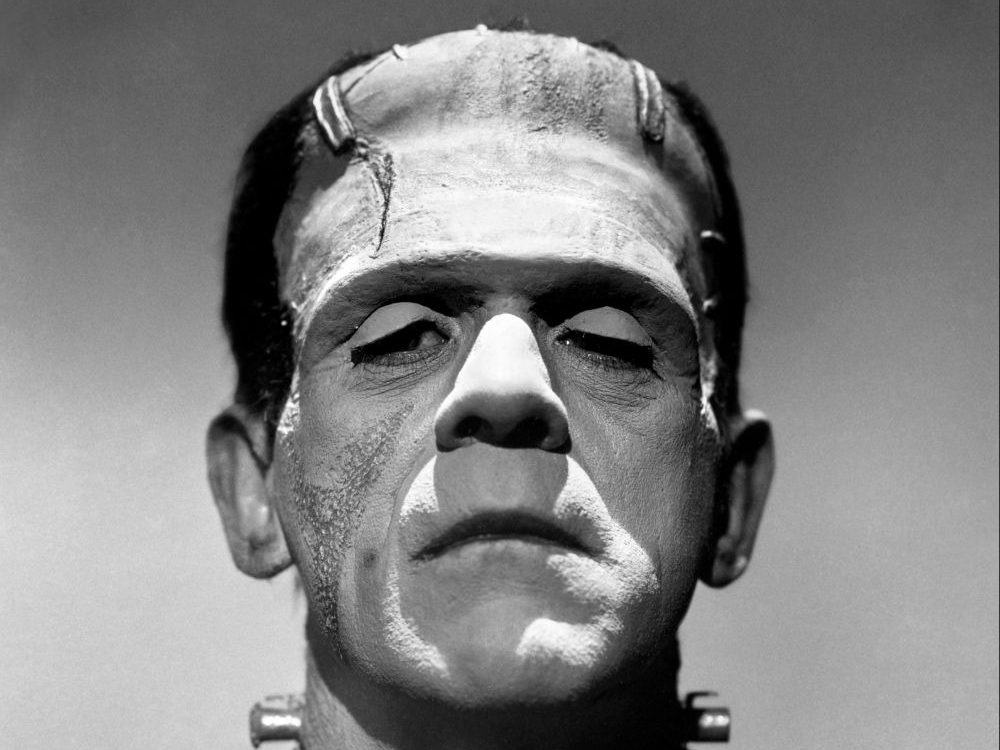
The most iconic iteration of Frankenstein remains the 1931 film adaptation directed by James Whale. The film pays homage to the original text to some degree, accurately portraying the creature’s transformation from helpless and speechless to enraged and violent. Yet, it departs from the novel in key ways. Most notably, it replaces Victor’s initial horror with the triumphant “It’s alive!”, weakening the creature’s early perception of himself as feared and rejected by his maker. It also omits the novel’s climactic opening, where Victor faces the inescapable consequence of his creation at the top of a mountain. By the film’s end, the audience feels fear, rather than sympathy, for the creature, a significant departure from Shelley’s original vision.
Poor Things, directed by Yorgos Lanthimos and released in 2023, is a bold reimagining of
Frankenstein. The film centers on Bella Baxter, a young woman resurrected by a scientist who
implants the brain of her unborn child into her body. It follows Bella’s transformation from a
wordless, instinctive creature to someone fully immersed in her existence, unbound by social
conventions. In many ways, the film answers: What if Frankenstein’s creature had not been born
hideous and rejected, but loved, nurtured, and set free to know the world? As Emma Stone’s
Bella declared, “I am Bella Baxter and there is a world to enjoy, traverse, circumnavigate.” The world excitingly exists before Bella in a way it never could for Shelley’s creature. In this, Poor Things rekindles a childlike sense of wonder for the world.
The upcoming adaptation titled Frankenstein, directed by Guillermo del Toro, will debut in select theatres on October 17th before streaming on Netflix on November 7th. Premiering at the Venice Film Festival and later at the Toronto International Film Festival, del Toro’s film has already received a positive reception. Known for humanizing “monsters” in films, such as The Shape of Water and Pan’s Labyrinth, del Toro seeks to instill a newfound compassion toward the creature in Frankenstein. This vision echoes in the interview commentary of the film’s cast. Jacob Elordi describes himself playing the creature as representing “our beauty and our innocence,” while Oscar Issac, playing Victor Frankenstein, noted that the film “really shows you that the world tells you what you are.”
With a $120 million budget, a star-studded cast, and Netflix’s backing, del Toro’s film could
carry commercial trappings. Yet, the producer’s childhood dream to adapt Frankenstein inspires
optimism that this film will properly honour Shelley’s classic Gothic novel.






Leave a Reply