Arshad Saleh Features Editor
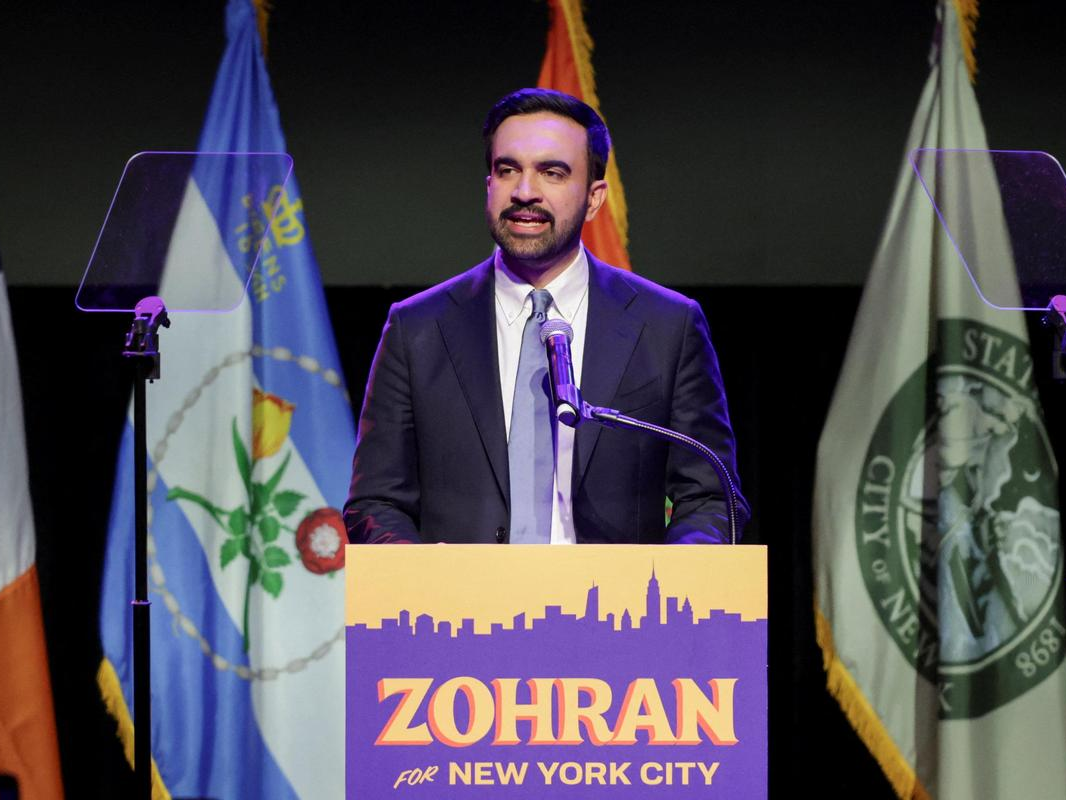
In today’s political sphere, we’ve become accustomed to political positions only being accessible to a certain class of people. It is the status quo that if you want to hold an important office, you must have the money, the connections, and make the right people happy. So, when a young assemblyman from Astoria tossed his name into the race to be the democratic nominee for New York’s Mayoral race, he was quickly disregarded. Sure, he had a growing social media presence and his policies seemed appealing, but those won’t win you elections. Elections are won by influence and names that hold weight. That happened to be exactly who Mamdani was running against in the democratic primary, Andrew Cuomo, heir of a political dynasty and favourite to win the race. However, with all the odds stacked against him, Mamadani won. This victory represents more than just a political win; it represents the retaking of power by a class of people who have long been misrepresented.
To talk about what Mamdani represents, we need to talk about who he is. He was born in Uganda to parents of Indian origin. He is the son of Mahmood Mamdani, an anthropologist and professor at Columbia University, and Mira Nair, a critically acclaimed filmmaker. Mamdani and his family moved to New York when he was seven years old. He joined the Democratic Socialists of America in 2017 and was elected a member of the New York State Assembly in 2020. Mamdani has also long been critical of Israel’s genocide of Palestinians in the Gaza Strip, going as far as to say that, as mayor, he would have Benjamin Netanyahu arrested in accordance with the ICJ if he were to ever enter New York City. The policies he focused on in his campaign were making buses fast and free, providing universal childcare for all New Yorkers and freezing the rent for all rent-stabilized tenants. He said he would pay for these policies by raising the tax on the wealthiest New Yorkers.
Andrew Cuomo, along with mainstream media, continuously attacked Mamdani for his inexperience and slandered him as a communist and antisemite. The antisemitic claims were spearheaded when a podcast clip of Mamdani was taken out of context when he refused to condemn the phrase “globalize the intifada”. What he was trying to say was that we should not take a Trump-style approach in banning certain words and phrases, as they have different meanings to different people. Those against Mamdani misconstrued this as a call to “kill all the Jews”. In reality, “intifada” is an Arabic word for uprising and as Mamdani says in the very same podcast clip. It is a call for justice and equal rights, not violence. Mamdani’s stance on Israel was repeatedly used to frame him as an anti-Semite, even though Israel does not represent all Jewish New Yorkers; throughout the campaign Mamdani maintained that he believes Israel has a right to exist as a state of equal rights and reaffirmed his commitment to ensuring the safety of Jewish New Yorkers.
After losing the democratic nomination to Mamdani, Cuomo chose to run as an independent. His already weak and empty campaign reduced to blatant islamophobia at times, darkening Mamdani’s beard in campaign ads and going as far as to insinuate that Mamdani would celebrate a terrorist attack on New York. The media and many influential wealthy figures still backed Cuomo; his campaign saw donations from super-PACs amounting to nearly $25 million. While Cuomo relied on big donors, Mamdani only took small donations and stopped asking for donations as soon as it reached $8 million. He instead asked people to volunteer in his campaign, building a large base that was passionate about the policies he was pushing.
Mamdani’s campaign connected with everyday people, and so did his experience. During his campaign, a taxi driver named Mahmadou was asked about Mamdani. Mahmadou said, “I can put my life on the line for him because he put his life on the line for me”. He was talking about Mamdani’s involvement in a 2021 hunger strike during New York’s debt crisis that was taking a toll on taxi drivers, which led to nine taxi drivers taking their lives. The hunger strike lasted for 15 days until a resolution was reached with City Hall. Stories like this give perspective to the experience that Mamdani holds. He may not have had experience holding big offices, but he has had experience fighting for honest and hardworking people that the system has left behind.
Inexperience was never truly the issue; democrats and republicans alike saw Mamdani as a common enemy. A socialist and an outsider who did not fit the mould of a politician we have become accustomed to. Mamdani was shamed for being a socialist by his peers, and his policies were called unrealistic. However, there is nothing unrealistic about wanting to provide a dignified life for those in your city when its richest citizens can pour millions into failed election campaigns. Mamdani was criticized even for eating with his hands, a South Asian tradition. The fearmongering and xenophobia were used to divert attention from Mamdani’s promises to deliver a more affordable city.
In a time when racism towards South Asians has become the norm, it was refreshing to see someone represent his community unapologetically. The story of the New York Mayoral election transcended the five boroughs. People from all over the world celebrated Mamdani’s victory, not only because his policies were popular but because he stood his ground when he was told he had no place at the table. His story told the immigrant story. Uncivilized, inexperienced, and dangerous were all labels that were attached to Mamdani and are all labels’ immigrants have to face. Mamdani never backed down from his beliefs, running a joyous and positive campaign that brought people together. The real work is ahead of him now, but during these bleak times, the story of Zohran Mamadani’s campaign is one we all needed.




Leave a Reply